
Why Power BI Skills Are Important for Data Analysts
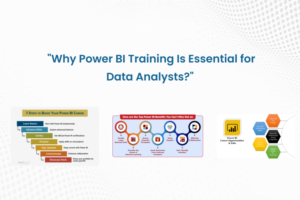
power bi skills for data analyst career and business intelligence dashboards
Introduction: The Rise of Power BI
In today’s data‑driven world, the ability to transform raw numbers into clear, actionable insights is no longer a luxury—it’s a core business requirement. Among the many business‑intelligence platforms available, Microsoft Power BI has emerged as a favourite for its blend of power, flexibility, and cost‑effectiveness. For data analysts, mastering Power BI is quickly becoming as essential as knowing Excel or SQL.
Why Power BI Is a Must‑Have Skill for Data Analysts
2.1 Faster Insight Generation
Power BI’s drag‑and‑drop interface lets analysts build dashboards in minutes rather than hours. Its built‑in DAX (Data Analysis Expressions) language streamlines complex calculations, meaning you can move from data ingestion to insight delivery with fewer bottlenecks.
2.2 Seamless Integration with Enterprise Data
From Azure Data Lake to on‑premise SQL Server, Power BI connects to virtually any data source. The platform’s gateway technology ensures that analysts can refresh reports in real time without compromising security—a critical advantage for organisations that need up‑to‑date performance metrics.
2.3 Interactive Visualisations that Tell a Story
Static spreadsheets rarely capture the nuance of business trends. Power BI’s interactive visualisations—slicers, drill‑throughs, and custom visuals—invite stakeholders to explore data on their own terms. This interactivity promotes data‑driven decision‑making across departments, positioning the analyst as a strategic partner rather than just a report generator.
Career Boost: From Analyst to Strategic Partner
Employers increasingly list “Power BI expertise” alongside traditional analytics skills. A data analyst who can design end‑to‑end reporting solutions not only adds immediate value but also opens doors to roles such as Business Intelligence Developer, Analytics Manager, or even Chief Data Officer. In competitive markets like Singapore, a certified Power BI skill set can differentiate you from peers and command higher remuneration.
Choosing the Right Learning Path in Singapore
If you’re based in Singapore, you have several options to upskill:
- Self‑paced online modules – great for busy professionals but can lack real‑world feedback.
- Power Bi class in Singapore – classroom‑based sessions provide hands‑on labs and immediate instructor support.
- Power Bi course in Singapore – intensive, often week‑long programs that combine theory with a capstone project.
When selecting a program, look for:
- Practical labs that use real business data.
- Mentor‑led Q&A sessions.
- Certification preparation for the Microsoft Power BI Analyst Associate exam.
Choosing a reputable provider ensures you acquire not just knowledge, but the confidence to apply Power BI in day‑to‑day analytics work.
How Maria Academy Can Help You Master Power BI
Maria Academy stands out as Singapore’s most comprehensive software‑training hub. Whether you’re seeking a full‑scale Power Bi course in Singapore, Maria Academy delivers:
- Industry‑relevant curriculum designed by certified Power BI professionals.
- Small class sizes for personalised guidance and rapid problem‑solving.
- Post‑course support, including access to a community of alumni and optional one‑on‑one tutoring.
Beyond Power BI, Maria Academy offers training across the entire Microsoft stack, data‑science tools, and emerging technologies—making it a one‑stop destination for all your upskilling needs.
Frequently Asked Questions
Q: Do I need prior experience with Microsoft Excel to take a Power BI class in Singapore?
A: While Excel familiarity speeds up learning, Maria Academy’s introductory modules start with the basics, so absolute beginners can join confidently.
Q: How long does it take to become proficient in Power BI?
A: A focused Power Bi course in Singapore typically runs 5–7 days of intensive training. Most participants feel comfortable building dashboards after completing the program and a few practice projects.
Q: Is the Power BI certification worth pursuing?
A: Yes. The Microsoft Power BI Analyst Associate certification validates your skill set to employers and often leads to higher salary brackets.
Q: Will I have access to course materials after the class ends?
A: Maria Academy provides lifetime access to lecture recordings, lab files, and practice exams, allowing you to refresh concepts whenever needed.
Q: Can I combine Power BI training with other software courses?
A: Absolutely. Maria Academy offers bundled packages that include Power BI alongside Azure, SQL Server, or Tableau, giving you a broader data‑analytics toolkit.
Ready to future‑proof your analytics career?
Enroll in a Power Bi class in Singapore at Maria Academy today and join the ranks of data professionals who turn raw data into strategic insight—fast, interactive, and with confidence.
How to Become a Data Analyst Without a Tech Background (Complete Beginner Guide)
How to Become a Data Analyst Without a Tech Background (Complete Beginner Guide)
The demand for data analysts has grown rapidly as organizations rely more on data to guide business decisions. From e-commerce companies to healthcare organizations, data is now at the center of strategic planning. Because of this shift, data analytics has become one of the fastest-growing career opportunities, and the good news is that you don’t necessarily need a technical background to enter this field.
Many professionals from commerce, finance, marketing, economics, and even humanities are successfully transitioning into data analytics roles. With the right learning path and practical training, beginners can build the required skills and start a career in analytics.
Why Non-Tech Professionals Can Become Data Analysts
Unlike some software development roles, data analytics is not purely about coding. It focuses on analyzing data, identifying patterns, and helping businesses make informed decisions.
Professionals with non-technical backgrounds often bring valuable skills such as:
- Business understanding
- Problem-solving ability
- Analytical thinking
- Communication skills
Companies often look for analysts who can translate data into business insights, which makes professionals from business-related fields well suited for analytics roles.
Step 1: Understand the Role of a Data Analyst
Before learning tools, it is important to understand what data analysts actually do in an organization.
A typical data analyst works with data to:
- Collect and organize datasets
- Clean and prepare raw data for analysis
- Identify patterns and trends
- Create dashboards and reports
- Provide insights that support business decisions
In simple terms, a data analyst converts raw data into meaningful information that helps companies improve performance.
Step 2: Learn the Essential Data Analytics Tools
To begin a career in data analytics, you only need to focus on a few core tools.
Excel
Excel is one of the most widely used tools for data analysis. Many businesses still rely on Excel for reporting and data management.
Important Excel skills include:
- Pivot tables
- Data cleaning
- Logical functions
- Charts and dashboards
SQL
SQL (Structured Query Language) is used to extract data from databases. Most companies store large datasets in databases, and analysts use SQL to retrieve relevant information.
With SQL, you can:
- Query large datasets
- Filter and organize data
- Join multiple data tables
Data Visualization Tools
Data visualization tools such as Power BI and Tableau help analysts present complex data in a simple visual format.
Businesses use dashboards created in these tools to track:
- Sales performance
- Marketing campaigns
- Customer behavior
- Operational metrics
Visualization helps decision-makers understand insights quickly.
Python (Optional for Beginners)
Python is increasingly used in data analytics for advanced data analysis and automation. Although beginners can start with Excel and SQL, learning Python later can help expand career opportunities.
Python libraries commonly used in analytics include tools for data analysis and visualization.
Step 3: Work on Real Data Projects
Practical experience is one of the most important factors when applying for data analytics jobs. Employers prefer candidates who can demonstrate real-world problem-solving skills.
Examples of beginner projects include:
- Sales data analysis
- Customer segmentation analysis
- Marketing campaign performance analysis
- Business dashboard creation
Projects help you apply theoretical knowledge and build confidence in using analytics tools.
Step 4: Build a Data Analytics Portfolio
A strong portfolio helps you stand out when applying for jobs, especially if you are transitioning from another field.
Your portfolio may include:
- Excel dashboards
- SQL queries and data analysis reports
- Power BI or Tableau dashboards
- Python-based data analysis projects
Recruiters often review portfolios to assess practical skills and analytical thinking.
Step 5: Take a Structured Data Analytics Course
Many beginners choose structured training programs to accelerate their learning journey. A well-designed course helps learners understand the complete analytics workflow, including data collection, analysis, and visualization.
A practical training program typically includes:
- Tool-based learning (Excel, SQL, Power BI, Python)
- Real-world projects
- Industry case studies
- Interview preparation
Learning through a structured program can significantly improve job readiness.
Data Analyst Salary Guide in India
Data analytics offers competitive salaries, even for beginners. Salaries vary depending on experience, location, and technical skills.
Entry-Level Data Analyst
- Salary range: ₹3 LPA – ₹6 LPA
- Typically for freshers or professionals with less than 2 years of experience
Mid-Level Data Analyst
- Salary range: ₹6 LPA – ₹12 LPA
- Professionals with 2–5 years of experience and strong tool expertise
Senior Data Analyst
- Salary range: ₹12 LPA – ₹20+ LPA
- Analysts with extensive experience in data strategy and advanced analytics
Cities such as Bangalore, Chennai, Hyderabad, and Mumbai often offer higher salary packages due to the presence of major technology companies and startups.
As organizations continue investing in data-driven decision making, the demand for skilled analysts is expected to grow further.
Career Opportunities After Learning Data Analytics
Once you build the required skills and experience, several career paths become available:
- Data Analyst
- Business Analyst
- Reporting Analyst
- Data Visualization Specialist
- Product Analyst
Many industries hire data analysts, including finance, healthcare, e-commerce, retail, logistics, and technology.
Frequently Asked Questions (FAQ)
Can I become a data analyst without a technical background?
Yes, many professionals transition into data analytics from non-technical fields such as commerce, finance, and marketing. With the right training and practical projects, it is possible to build the required analytical skills.
How long does it take to learn data analytics?
For beginners, learning the fundamentals of data analytics tools may take 3 to 6 months with consistent practice. Building strong project experience may take additional time.
Is coding required to become a data analyst?
Coding is not always mandatory for entry-level roles. Many analysts begin with Excel, SQL, and visualization tools. However, learning Python later can help expand career opportunities.
What skills are required to become a data analyst?
Key skills include:
- Data analysis
- SQL and Excel
- Data visualization
- Problem solving
- Analytical thinking
Are data analytics jobs in demand in India?
Yes, the demand for data analytics professionals is increasing across industries. As companies rely more on data-driven strategies, the need for skilled analysts continues to grow.
Recent Posts
- Banking Sector: Tackling Security and Data Integrity Challenges with .NET Skills
- How Data Analytics Helps Manufacturers in Bangalore Reduce Production Downtime
- Understanding ASP.NET MVC Architecture with Real Examples
- Common Challenges in Learning Programming and How Python Makes It Easier
- Why Companies Are Hiring More React Developers Than Ever Before
Categories
- All
- Angularjs training in Chennai
- ASP.NET Core
- Data Analytics
- Dot Net Development Course
- dot net training
- dot net training in chennai
- dotnet full stack developer
- Free dotnet training
- information on dotnet
- Learn Java in chennai
- Learn Python at Karaikudi
- learn python online
- learn python online from chennai
- Linq Queries in .net
- mutual funds
- MVC Training Tutorials
- PHP Training in Chennai
- pmp training online
- power apps online training
- Power platofrm
- Python Training Online
- React Full Stack Development
- React training
- ReactJs
- share market
- Sharepoint framework online training
- SharePoint Freelancers in Chennai
- software testing
- spfx online training
- SQL Course Details
- Stock market
- Uncategorized